
THE CONCEPT OF MAINTENANCE UNDER HINDU LAW

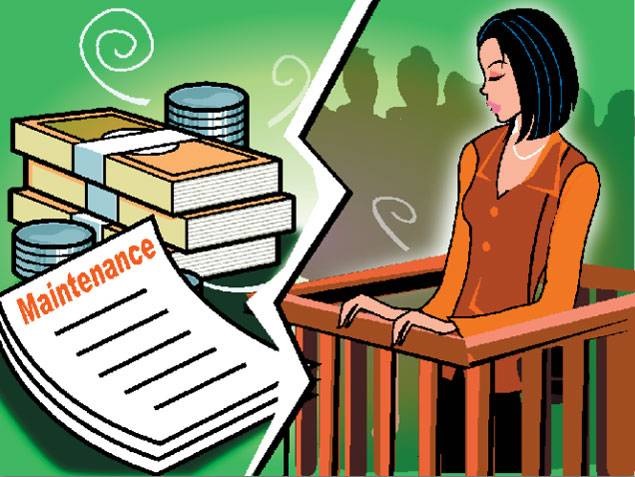
The term maintenance is defined as providing financial support to the dependents.  Maintenance is governed differently by different religions but there are secular laws in terms of maintenance which are applicable to all the citizens of India irrespective of their religion which are as following: – Special Marriage Act,1954 Section 125 of the Cr.P.C. 1973 Protection of Women from Domestic Violence Act, 2005 Maintenance under various laws are: – Section 18 read with 23,24,25,26 of Hindu Law – Section 125 of the Code of Criminal Procedure 1973 Section 20(1)(d) and 20(6) under the Protection of women from Domestic violence Act, 2005   MAINTENANCE UNDER HINDU LAW Maintenance under Hindu law is governed by the Hindu Marriage Act, 1955 and Hindu Adoption and Maintenance Act, 1956. The Hindu Marriage act is a code which provides for the rights, liabilities and obligations that arises out of a marriage between two Hindus. Maintenance is provided under Section 24, 25 and 26 of the Act. The sections being gender-neutral provisions, entitle both the husband and the wife to raise a claim for maintenance on the ground that the applicant does not have a sustainable income and is unable to maintain himself or herself. In Lalit Mohan v. Tripta Devi (1988)1 the Jammu & Kashmir High Court held that the husband did not have an independent income. Hence, the wife was ordered to pay Rs. 500/- as court expenses, Rs. 100/- per month as maintenance pendente lite and permanent alimony to the husband, from the date of application till his death or remarriage. Section 24 of the Hindu Marriage Act talks about the provision of maintenance ‘pendente lite’. In this, the court directs the respondent to pay the expenses that arise during the proceeding along with the payment of a monthly amount which is reasonable and is in accordance with the income of both the parties. Section 25 of the Act elaborates the provisions on ‘maintenance’ and ‘permanent alimony’. In this, the court may direct the respondent to pay the applicant a fixed amount on a monthly basis or a lumpsum, considering the income of the respondent. Section 26 of the Act states that the court may pass interim orders with regard to the custody, maintenance and education of the minor children, from time to time. Hindu Adoption and Maintenance Act, 1956 (HAMA) was specially enacted to amend and codify Hindu laws relating to adoption and maintenance.  Section 18 read with section 23 provides for the maintenance laws under HAMA. They state the pre-requisites for deciding the quantum of maintenance which is to be paid. Section 18 states that a Hindu wife has a right to be maintained by her husband. She is also entitled to make a claim to live separately without losing her claim to maintenance. However, the right to maintenance and living separately would not be available if the wife has been unchaste or has converted to another religion. When we look at the both HMA and HAMA, the interplay of maintenance was taken into consideration by the Supreme Court in Chand Dhawan v Jawaharlal Dhawan2. Here the Supreme Court held that Section 18 (1) of HAMA provides the wife with the right to claim maintenance during her lifetime and Section 18 (2) provides the wife with the right to live separately without having to give up the claim for maintenance. However, under HMA the wife does not have the right to permanent alimony under Section 25 till the divorce petition is approved but can claim maintenance pendente lite, which is dependent on the pendency of the petition. HAMA also provides for the maintenance of a widowed daughter-in-law by the father-in-law. Section 19 of HAMA states the requisites for the claim of maintenance which are: – She is unable to maintain herself out of her own independent income or other property She has no property of her own or is unable to maintain herself from The estate of her husband, father or mother Her son or daughter Section 20 of HAMA provides for maintenance of children and aged parents. It also places an obligation on a Hindu male to maintain his unmarried daughter, if she is not able to maintain herself out of her income or other property. In Abhilasha v Parkash & Ors.3 the Supreme Court pointed out the obligation of father to maintain his unmarried daughter under the HAMA but under Section 125 of Cr.P.C., the claim for maintenance is available till the child attains majority. However, if the unmarried daughter is suffering from any physical or mental abnormality, or injury and hence, is unable to maintain herself, then the father is obligated to maintain her even after the attainment of majority.   SECTION 125 OF Cr.P.C. Chapter IX of Code of Criminal Procedure, 1973 provides for the maintenance of wife, children and parents. Maintenance under this section can be claimed by eligible individuals irrespective of their religion. It can be claimed under two conditions: – The husband/father/son has sufficient means, and He further neglects to maintain his wife/children/parents, who is/are unable to maintain herself/themselves. The Amendment Act of 2001 further brought in a series of changes. Before the Amendment Act of 2001, there was a fixed amount of Rs. 500 being awarded as maintenance. Looking at the inflation rates, this fixed amount was removed. The Amendment also brought in the provision for interim maintenance so that the dependent wife/children/parents do not have to wait for indefinite periods to receive maintenance. Another prevalent issue is the question of maintenance when the parties are in a live-in relationship for a long period of time.  In the case Chanmuniya v Virendra Kumar Singh Kushwaha & Anr4 the Supreme Court held that when a man and woman have cohabited for a considerable amount of time such a woman will be entitled to maintenance. ISSUES After looking at these provisions for maintenance, a few issues have come to the notice of courts. Overlapping jurisdiction: Overlapping jurisdiction here refers to a situation where a

THE CONCEPT OF MAINTENANCE UNDER HINDU LAW Read More »